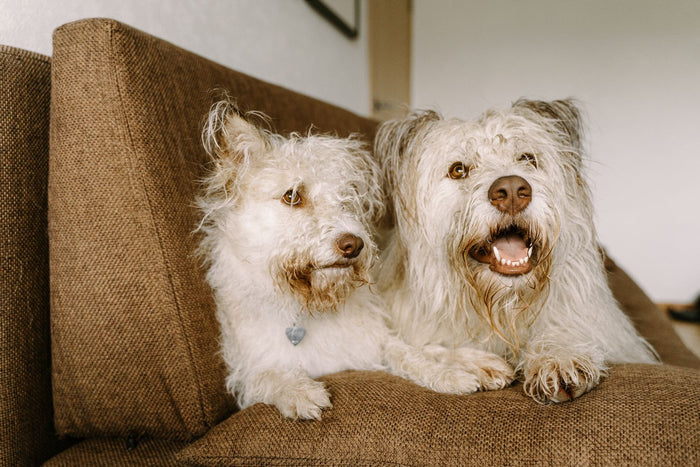
If you could build a second dog out of the fur that comes off yours every spring, you've got a shedder. Labs, Goldens, Huskies, German Shepherds, Corgis, Aussies: most of them have a double coat, which means a soft, dense undercoat under the longer outer hair. That undercoat is what ends up on your floor, your couch and somehow inside your fridge.
You can't stop a healthy dog from shedding. What you can do is get the loose fur out on purpose, in one spot, a few minutes at a time, instead of letting it fall out all over the house.
What "deshedding" actually means
It's just removing the undercoat that's already loose. You're not cutting anything and you're not thinning the coat. You're pulling out hair that was going to fall out this week anyway. Done right, your dog's coat looks lighter and shinier, and the tumbleweeds in the hallway get a lot smaller.
The tools that actually help
- A slicker brush for working through the outer coat and loosening tangles.
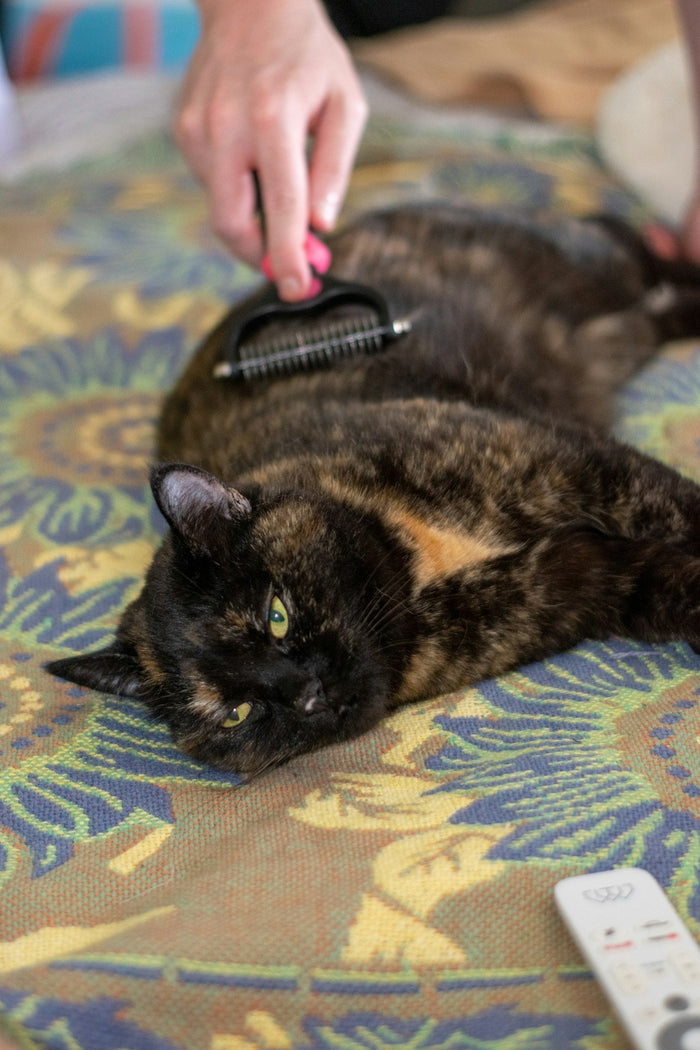
- An undercoat rake or deshedding tool for thick double coats. Gentle pressure only. Pressing hard can irritate the skin.
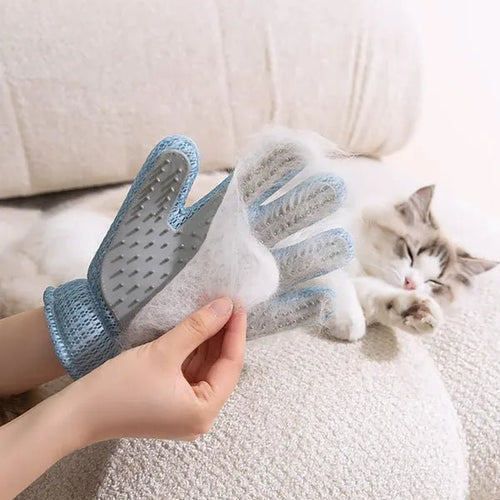
- A deshedding glove for dogs who won't sit still for a brush. It feels like petting, so a lot of dogs just lean into it.
- A mist brush for short coats and for the last pass. The light water mist keeps loose hair from flying around the room.
You don't need all four. Most dogs do fine with one brush and one glove.
Step by step
- Go outside if you can. Or put down an old sheet. Trust us on this one.
- Start with a quick once-over. Use the glove or slicker brush to loosen everything up and check for knots.
- Work in sections. Back, sides, chest, back legs, tail. Brush in the direction the hair grows, in short strokes.
- Go slow on the "pants" and behind the ears. That's where undercoat gets thick and tangles hide. Hold the hair near the skin so you're not tugging.
- Finish with a mist brush or a damp glove. It picks up the loose stuff sitting on top of the coat.
- Stop before your dog is done with it. Ten minutes is plenty. You can do the other side tomorrow.
How often?
For most double-coated dogs, two or three times a week keeps things under control. During the big seasonal sheds, usually spring and fall, a few minutes every day makes a real difference. Short-coated dogs like Beagles or Pugs shed too, and a weekly pass with a glove or mist brush is usually enough.
A bath first helps a lot
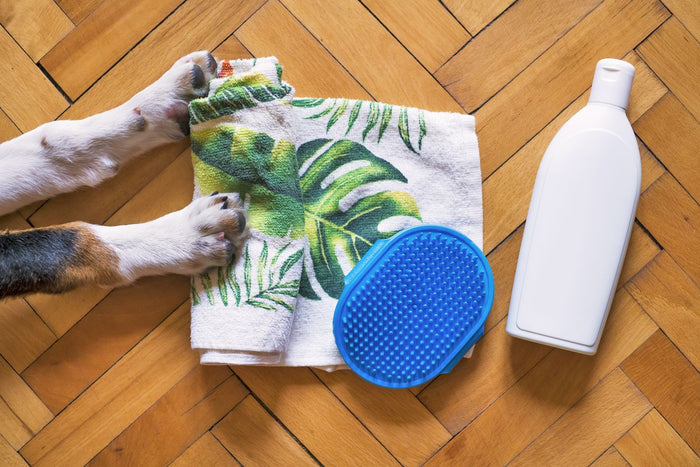
Warm water and a good rinse loosen a surprising amount of undercoat. If your dog tolerates baths, brush a little before, bathe, dry them fully, and then brush again. The second brushing is where you'll see the most come out. (If baths are a battle, we wrote a guide on bathing a dog who hates baths.)
What to skip
- Shaving a double-coated dog. It seems like it would fix the problem, but the undercoat can grow back patchy and uneven, and the coat helps protect them from sun and heat. Talk to a groomer first.
- Using a deshedding blade every day. Too much raking can scratch or irritate the skin. Follow the tool's instructions.
- Brushing a matted coat hard. It hurts. Small mats can be worked loose with your fingers. Big ones are a job for a groomer.
When shedding isn't normal
Seasonal shedding is expected. Bald patches, red or flaky skin, constant scratching or a dull, brittle coat are not. If you see those, check in with your vet. Diet, allergies, parasites and some health issues can all show up as extra shedding.
The short version
A few minutes of brushing, a few times a week, in one spot you can sweep up. That's the whole trick. Start with the Deshedding Glove if your dog isn't a brush fan, and see our tips on getting dog hair off the couch for whatever escapes.