You've probably seen the cat steam brush all over your feed: a little brush that puffs out mist while you groom, and a cat who suddenly seems fine with the whole thing. Does a cat steam brush actually work, or is it just a cute gadget? After a lot of fall brush-outs, here's my honest take, plus how to use one so your cat doesn't bolt the first time it hisses.
What a cat steam brush actually is
Despite the name, there's no hot steam involved. A steam brush has a small water tank and a button that sends a fine, room-temperature mist out between the teeth while you brush. Most have soft silicone teeth rather than metal pins.
The mist does one simple job. Dry, loose fur is light and static-y, so when you brush it, a lot of it floats off into the air and lands on your couch and your black leggings. Slightly damp fur clumps together and sticks to the brush instead. Same fur, fewer fur clouds.
Does a cat steam brush work? An honest answer
It works well for some things and not for others. Here's where it earns its spot in the drawer:
- Less airborne fur. This is the main win. If brushing your cat usually leaves a halo of hair around you, the mist cuts that down noticeably.
- Short and medium coats. On most domestic shorthairs, it picks up the loose top layer nicely.
- Cats who dislike brushes. Soft silicone feels more like a massage than a comb, and plenty of cats accept it better than a slicker.
- Quick daily touch-ups during shedding season, when a minute a day keeps the tumbleweeds down.
And where it falls short:
- Thick undercoats. Soft teeth don't reach deep. For long-haired or double-coated cats, you'll still want a slicker brush to get the undercoat out.
- Mats. A mist can help loosen small tangles, but it won't fix real mats. Those need careful work, or a groomer.
- Skin problems. A brush won't treat dandruff, itching or bald patches. More on that below.
So think of it as a gentle everyday brush that keeps the mess down, not a deep deshedding tool.
How to use a cat steam brush, step by step
1. Fill it with plain water only
Use clean tap or filtered water. Don't add shampoo, perfume or essential oils. Cats groom themselves and swallow whatever is on their coat, and many essential oils are not safe for cats. Plain water is all it needs.
2. Introduce the sound before the brush
The mist makes a soft hiss, and to some cats that sounds a lot like another cat. Don't start by spraying it near their face. Sit near your cat, press the button a few times with the brush pointed away, and give a treat. Do that for a day or two until the sound is boring.
3. Start dry, on their favorite spot
For the first session, don't use the mist at all. Brush along the back and cheeks, where most cats like to be touched, and stop while they're still enjoying it. You want them to remember it as a nice thing.
4. Add the mist a little at a time
Once dry brushing is accepted, tap the mist every few strokes. The fur should feel barely damp, never wet. If you can see water beading on the coat, you're using too much.
5. Brush with the coat, not against it
Long, slow strokes in the direction the fur grows. Skip the face, belly and tail unless your cat is clearly fine with it. Light pressure is plenty; pressing harder doesn't get more fur out, it just makes the next session harder.
6. Peel, toss, and stop early
When the teeth fill up, peel the fur off in one go and throw it out. Two to five minutes is a good session. It's better to end on a calm note and come back tomorrow than to push until your cat swats you.
7. Empty and dry the tank
Pour out leftover water after each use and let the brush air dry with the tank open. Water sitting in a warm drawer for a week isn't something you want misted onto your cat.
A simple fall routine that pairs it with other tools
October and November are peak shedding months for a lot of cats as they swap their summer coat for a thicker winter one. This is the routine I'd use for a typical indoor cat:
- Short-haired cat: a few minutes with the steam brush most days during shedding season, then a few times a week once it settles.
- Long-haired or fluffy cat: a slicker brush two or three times a week to get the undercoat out first, then a quick pass with the steam brush to catch the loose fur sitting on top.
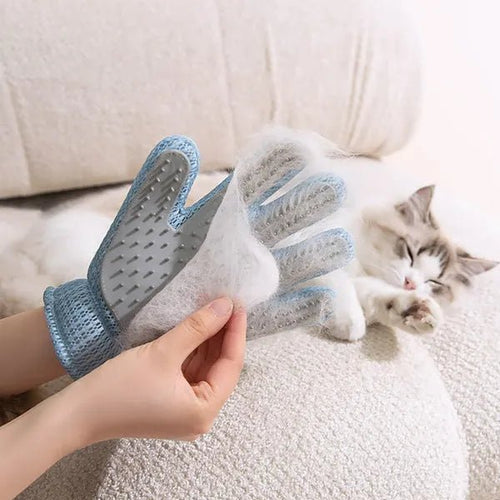
- Cat who won't tolerate any brush: start with a grooming glove so it just feels like petting, and introduce the steam brush later.
If you're working with a cat who flattens their ears the moment a brush comes out, our guide on how to brush a cat who hates being brushed walks through building trust slowly. And for the fur that's already on the furniture, see 9 ways to reduce cat fur around the house.
Where PawSheen fits in
We sell a Steam Brush for Shedding Cats & Dogs, built around exactly the routine above: soft silicone teeth, one button for the mist, and a USB-rechargeable battery. It's our go-to for daily touch-ups and for cats who walk away from regular brushes.
To be straight with you, it's not the only brush a fluffy cat needs. For long or thick coats, pair it with a slicker brush for the undercoat. And if your cat won't let any brush near them yet, the Deshedding Glove is the gentler first step. Orders over $40 ship free in the US, and you get 30 days to see how your cat takes to it.
When to call the vet instead
Seasonal shedding is normal. But bald patches, red or scabby skin, heavy dandruff, constant scratching or licking, or a sudden big jump in shedding outside of the usual seasons can point to fleas, allergies, stress or other health issues. A brush won't fix any of those. If you notice them, have your vet take a look before you change anything about grooming.
FAQ
Is a steam brush safe for cats?
Used with plain water and a light hand, yes for most healthy cats. The mist is room temperature, not hot. Keep it away from the eyes, nose and ears, and don't add oils or fragrances to the tank. If your cat has sensitive skin or a skin condition, ask your vet first.
How often should I use a cat steam brush?
During shedding season, a few minutes a day works well for most short-haired cats. Outside of shedding season, a few times a week is usually enough. Long-haired cats do better with a slicker brush as the main tool and the steam brush as a finisher.
Can I use a cat steam brush on my dog?
Yes. It works best on dogs with short to medium coats. For double-coated breeds like Huskies or Golden Retrievers, it won't reach the undercoat, so use it alongside a slicker or undercoat brush.
My cat is scared of the hissing sound. What now?
Go back a step. Use the brush dry for a week, and only press the mist button at a distance while giving treats. Some cats never warm up to the sound, and that's okay. A grooming glove or a soft dry brush still gets the job done.