If you've ever finished brushing your dog and then had to vacuum the living room, you've probably wondered whether a pet grooming vacuum is worth it. The idea is simple: brush and vacuum at the same time, so the loose fur goes into a canister instead of onto the rug. Some pets take to it right away. Others want nothing to do with it. Here's an honest look at what these tools do well, where they fall short, and how to tell if one makes sense for your home.
What a pet grooming vacuum actually does
A grooming vacuum is a small handheld vacuum with grooming heads on the front: usually a comb, a fine-tooth comb and a brush. As the teeth loosen dead undercoat, the suction pulls it straight into a canister. When you're done, you pop the canister open over the trash.
It's not a replacement for a good brush in every situation. It's a different way of doing the same job, with one big difference: the fur doesn't drift. That matters most in fall and winter, when many dogs drop their lighter coat, the windows are shut and the heat is on. Loose hair that would blow out the back door in July now settles on the couch, the stairs and your black leggings.
Who gets the most out of one
In my experience, a grooming vacuum earns its spot in the drawer if a few of these sound like you:
- You have a heavy shedder. Double-coated breeds like Labs, Huskies, Corgis, German Shepherds and Goldens release a lot of undercoat at once. Catching it at the source saves real cleanup time.
- You groom indoors. Apartment living, cold weather or no yard means brushing happens in the living room. A vacuum keeps the mess in one place.
- Someone in the house is bothered by floating hair. Less loose fur in the air and on surfaces is simply nicer to live with.
- You also want something for the couch and car. Most grooming vacuums come with a flat suction head you can run over upholstery afterward.
When a regular brush is the better choice
A grooming vacuum isn't the right tool for every pet, and it's fine to skip it.
- Very noise-sensitive pets. Every vacuum makes some sound. Some dogs and cats get used to it with patience; a few never will. Forcing it just makes grooming harder next time.
- Mats and tangles. Suction doesn't work out knots. For mats, you need a slicker brush and a comb, worked slowly from the ends toward the skin.
- Short, single coats. A Boxer or a Beagle may not shed enough to justify it. A rubber glove or a quick brush might be all you need.
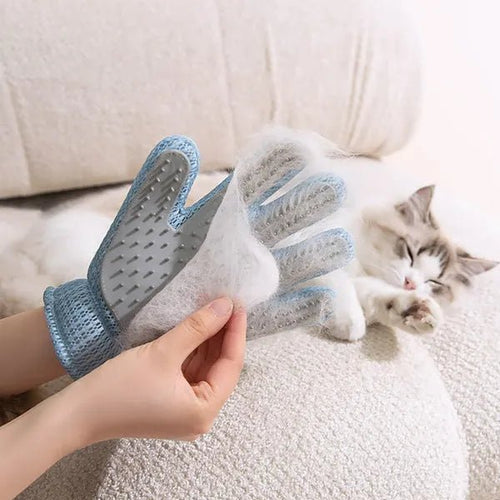
Many people end up using both: a self-cleaning slicker brush for quick daily touch-ups and tangles, and the vacuum for the bigger weekly deshed.
How to introduce a grooming vacuum to a nervous pet
This is the part that decides whether the tool works for you. Most pets aren't afraid of being brushed. They're unsure about the sound. Go slower than you think you need to.
- Day 1–2: Sound only. Turn the vacuum on across the room, nowhere near your pet. Toss a treat. Turn it off. Repeat a few times, then stop.
- Day 3–4: Closer. Run it a few feet away while your pet eats or licks something tasty. If they leave, you moved too fast. Back up a step.
- Day 5: Touch with it off. Brush a few strokes with the head while the motor is off, so the feel becomes familiar.
- Day 6 and on: Short sessions. Turn it on and do three or four slow strokes along the back, where most pets like being brushed. Treat, then stop while they're still relaxed.
A lick mat with a thin layer of peanut butter (check that it's xylitol-free) or plain yogurt is a huge help here. It gives your pet something better to focus on, and licking tends to settle most dogs and cats. If your dog is anxious about grooming in general, these calm tips for dogs who hate grooming are a good place to start before you add any new tool.
How to use it for the best results
Once your pet is comfortable, a good session looks something like this:
- Pick the right head. The wider comb is for thick undercoat on the back and sides. The fine-tooth comb works for shorter fur, the chest and around the legs.
- Go with the coat. Long, slow strokes in the direction the fur grows. Don't press down; let the teeth and suction do the work.
- Skip sensitive areas at first. Face, belly, tail and paws can wait until your pet trusts the tool.
- Keep it short. Five to ten minutes is plenty. You can always do more tomorrow.
- Empty the canister often. Suction drops as it fills. With a heavy shedder, you may empty it more than once per session.
- Brush on a dry coat. Damp fur clogs the heads and doesn't pull out as easily.
For a full walkthrough of seasonal shedding, including how often to deshed and what to do between sessions, see our guide on how to deshed a dog at home.
Grooming vacuum vs. brush and vacuum separately
You can absolutely get the same result with a brush and your regular vacuum. The difference is mostly in how the session feels:
- Brush first, vacuum later: cheaper, works for any pet, but fur goes airborne and you clean twice.
- Grooming vacuum: one step, less cleanup, but costs more and needs some training for pets who are unsure of the sound.
- Your household vacuum with a pet attachment: some people try this. Full-size vacuums are usually much louder and stronger than a grooming tool, so it's often more than a pet will tolerate.
Our own grooming vacuum brush is cordless and charges by USB, which makes it easy to groom wherever your pet happens to be relaxed, whether that's the dog bed or the end of the couch. It comes with a grooming comb, fine-tooth comb, brush head and a flat suction head for furniture and car seats. If it turns out your pet won't warm up to it, there's a 30-day trial, so you're not stuck with a tool that lives in a drawer.
A note on heavy shedding and skin
Seasonal shedding is normal. But if you notice bald patches, red or flaky skin, scabs, a lot of scratching, or shedding that seems far heavier than usual for your pet, call your vet before you change your grooming routine. Allergies, parasites, diet and other health issues can all show up as coat changes, and no brush or vacuum will fix those.
FAQ
Are grooming vacuums safe for cats?
Yes, for most cats, as long as you introduce it slowly and keep the suction on the coat, not pressed against the skin. Cats tend to be more sound-sensitive than dogs, so plan on a longer warm-up. If your cat stays tense after a couple of weeks, a deshedding glove or soft brush may suit them better.
How often should I use a pet grooming vacuum?
For heavy shedders during fall and spring, once or twice a week is a good rhythm. Outside of peak shedding, every week or two is usually enough. Short, regular sessions beat one long battle.
Will it remove mats?
No. Suction can't loosen a knot. Work mats out gently with a slicker brush and comb, or ask a groomer to help with tight mats close to the skin.
Is a grooming vacuum too loud for an anxious dog?
It depends on the dog. Like any vacuum, it makes noise. With a slow, treat-based introduction, many anxious dogs come around. If yours doesn't, that's okay. Stick with the tools they're comfortable with.